IVY LEAGUE DONOR DATA DUMPED: 624,000 ELITE RECORDS PUBLISHED IN MAJOR RANSOMWARE SPECTACLE
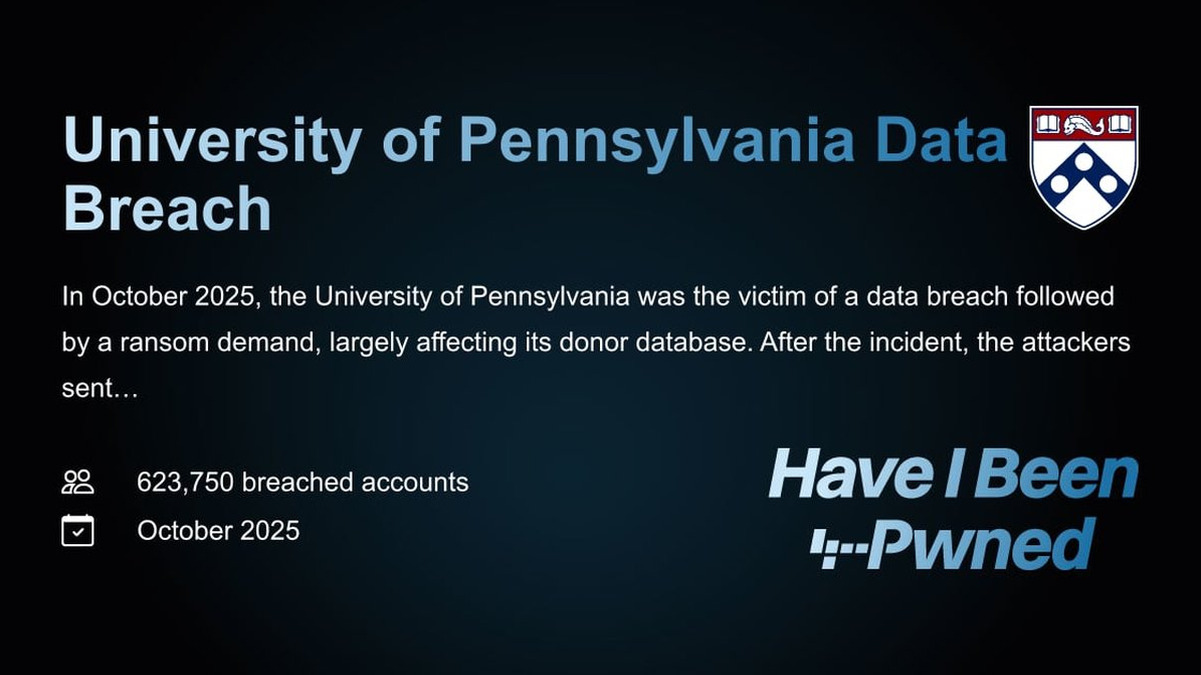
A prestigious university's deepest secrets are now on the dark web. In a devastating escalation of an October 2025 cyberattack, hackers have publicly released the personal data of over 624,000 University of Pennsylvania donors. This isn't just a simple data breach; it's a targeted ransomware siege that has morphed into a full-scale exposure of the elite's private lives. Names, physical addresses, and email addresses form the base of this toxic cache. For a significant number, the damage goes deeper: gender, date of birth, and for a chilling subset, highly sensitive details like religion, spouse names, estimated income, and full donation history are now in the wild.
The attack chain reads like a cybersecurity nightmare. Experts believe it started with a sophisticated phishing campaign or the exploitation of a critical zero-day vulnerability, granting attackers a foothold. They then deployed advanced malware, exfiltrated the donor database, and followed with a ransom demand. When the university refused to pay, the criminals turned up the heat, sending inflammatory emails directly to victims. The final act of retaliation was this massive data dump in February 2026, a stark lesson in the futility of negotiating with digital extortionists.
"This is a masterclass in attacker escalation," states a former FBI cyber investigator. "They moved from a stealthy exploit to data theft, to direct victim harassment, and finally to public shaming and exposure. The inclusion of financial and religious data is particularly egregious, creating unprecedented risks for identity theft and targeted scams." The breach exposes a grim reality: even institutions with presumed robust cybersecurity are vulnerable to determined adversaries who weaponize stolen data beyond a simple crypto ransom.
Why should you care? This breach transcends a single university. It's a blueprint for modern digital extortion. Your data, once stolen, can be used against you indefinitely. The attackers here didn't just lock data; they weaponized personal narratives. This incident also casts a harsh light on blockchain security promises, as ransom payments in crypto often fund further attacks without a trace.
We predict this "breach-and-broadcast" model will become the new standard for ransomware gangs targeting high-profile institutions. The payoff is no longer just currency; it's infamy and chaos.
Your personal information is the currency of cyberwar. Guard it like gold.