THE CROSS-PLATFORM PLAGUE: YOUR FRAGMENTED DEFENSES ARE THE ULTIMATE VULNERABILITY
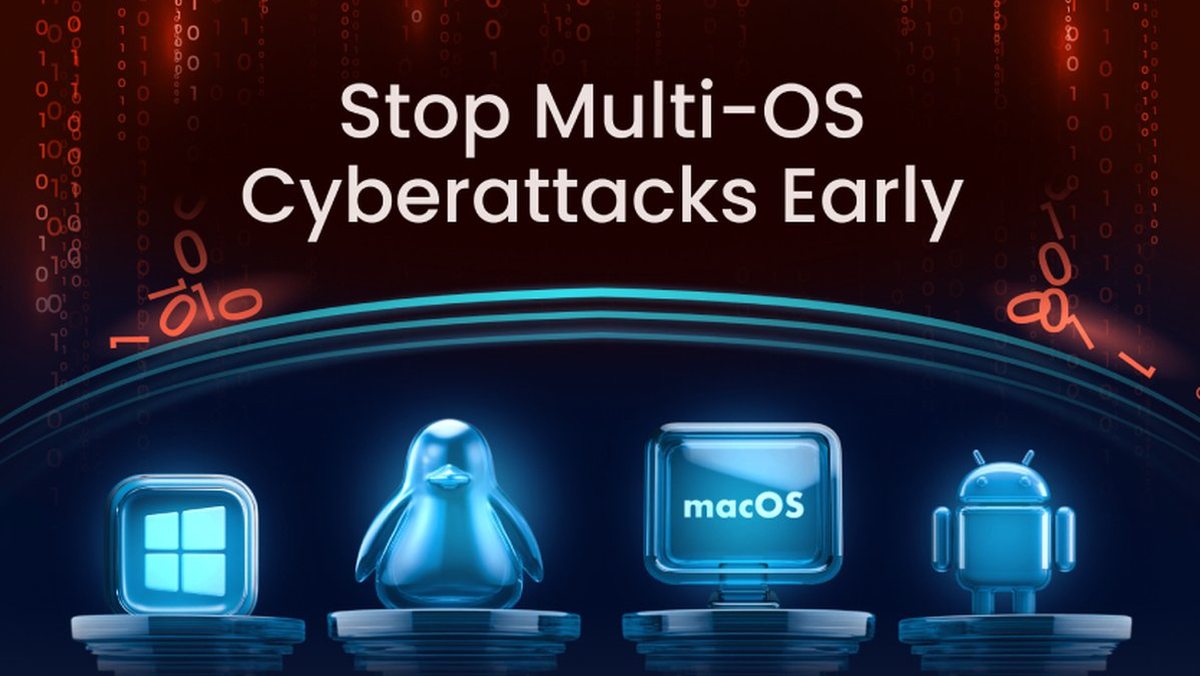
Forget guarding the castle walls. Modern cybercriminals are already inside, moving freely between your Windows servers, your executive's MacBook, and your cloud-based Linux infrastructure. This is the new reality of MULTI-OS CYBERATTACKS, a deliberate strategy exploiting the fragmented, siloed security operations in nearly every enterprise. Your greatest cybersecurity risk is no single piece of malware; it's your own disjointed visibility.
Attackers orchestrate campaigns that begin with a phishing email to a Mac user, pivot to exploit a Windows endpoint vulnerability, and then launch ransomware against critical Linux systems. They thrive in the gaps between your security tools. A zero-day exploit on one platform becomes a launching pad for a catastrophic cross-platform data breach, while your team struggles to correlate alerts from three different consoles.
"Security teams are fighting a unified enemy with divided tools," states a senior incident responder familiar with recent mega-breaches. "By the time the Windows team realizes the initial compromise came from a Mac, the attackers have already exfiltrated data to a crypto wallet and are deploying ransomware on the backend. The kill chain now spans operating systems, and most SOCs are blind to it."
This matters because your crown jewels are scattered. Financial records live on Windows, code repositories on Linux, and strategic communications on mobile and macOS devices. A platform-centric defense allows attackers to use less-secure devices as a beachhead to reach your most valuable assets. Even robust blockchain security for transactions is meaningless if the adjacent system managing the keys is compromised via an unrelated OS.
We predict a wave of 2024 breaches will be retrospectively traced to these cross-OS lateral movements, with losses magnified by the delay in detection. The industry will be forced to abandon platform-specific playbooks or face extinction.
The malware doesn't care what OS it lands on. Why does your security team?