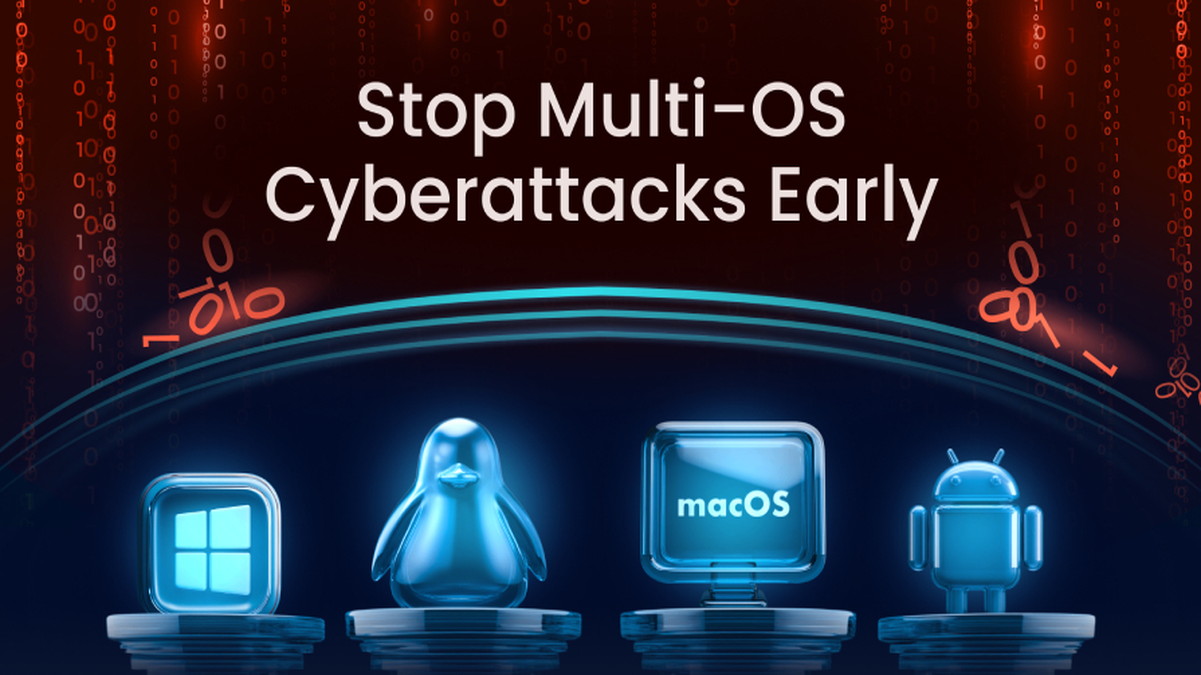
The modern enterprise attack surface is inherently heterogeneous, spanning Windows endpoints, executive MacBooks, Linux servers, and mobile devices. This diversity is actively exploited by threat actors who launch cross-platform campaigns, capitalizing on the fragmented security workflows that still plague many Security Operations Centers (SOCs). For security leaders, this reality creates a critical visibility and control gap, where sophisticated attacks can pivot undetected from one operating system to another, evading siloed detection tools.
To counter this evolving threat landscape, a paradigm shift in SOC strategy is required. The solution lies in moving from a platform-centric to a threat-centric operational model. This transformation can be achieved through three critical steps. First, organizations must implement a unified data layer that normalizes and correlates security events across all operating systems and environments. This creates a single source of truth, allowing analysts to track an attacker's lateral movement regardless of the underlying platform. Second, SOCs need to adopt and standardize cross-platform detection rules and hunting playbooks. A technique like credential dumping or lateral movement must be detectable and investigable in a consistent manner, whether it occurs on Windows, Linux, or macOS. Finally, the third step involves automating response actions that are equally effective across the entire estate. Quarantining a compromised device, blocking a malicious process, or revoking credentials must be executable commands that work uniformly, closing the loop on incidents faster and reducing the attacker's dwell time.
By following this three-step framework—unified data, standardized detection, and automated cross-platform response—SOCs can dismantle the operational silos that attackers rely on. This integrated approach not only improves threat visibility and accelerates mean time to respond (MTTR) but also optimizes analyst efficiency by presenting a consolidated view of incidents. In an era where cyber campaigns are deliberately designed to exploit fragmentation, building a cohesive, platform-agnostic defense is no longer a strategic advantage but a fundamental necessity for enterprise resilience.