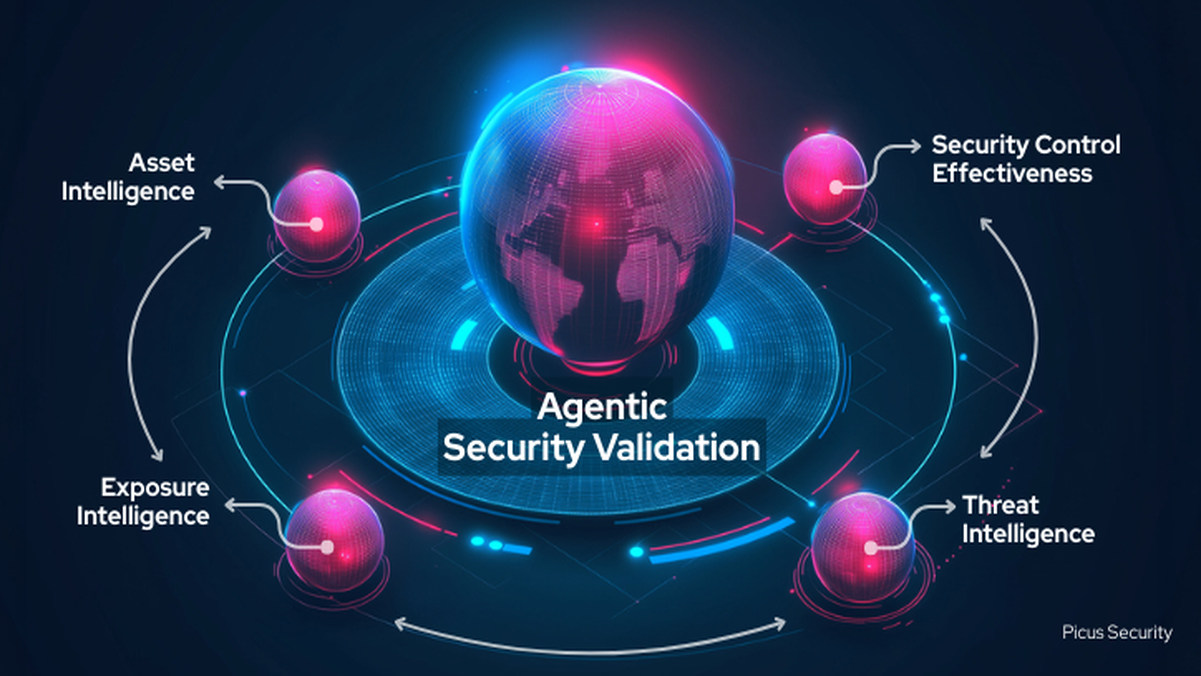
In today's complex organizational environments, security validation typically relies on a fragmented stack of specialized tools. A Breach and Attack Simulation (BAS) platform operates independently, while penetration testing engagements—whether manual or automated—run separately. Vulnerability scanners feed data into attack surface management systems, yet these components rarely communicate effectively. Each tool provides an isolated snapshot of security posture, creating a disjointed view that fails to reflect the interconnected nature of modern digital ecosystems. This siloed approach has persisted for years, driven by a market that treats each validation discipline as a distinct category with proprietary vendors, consoles, and limited risk assessments.
Adversaries, however, do not operate in silos. A sophisticated intrusion often chains multiple weaknesses: an exposed identity credential, a cloud misconfiguration, a missed detection signal, and an unpatched vulnerability can be exploited in a single, fluid operation. Attackers inherently understand that environments are interconnected systems, yet most validation programs still assess them as a collection of disconnected parts. This is not merely an operational inefficiency; it represents a structural blind spot that leaves organizations vulnerable to multi-vector threats. The limitations of traditional validation have become increasingly apparent as attack surfaces expand and threats evolve in complexity.
The emergence of autonomous AI agents capable of planning, executing, and reasoning across complex workflows is driving security validation into a new phase. This shift, termed Agentic Exposure Validation, promises a more coordinated, continuous, and context-aware approach. Unlike fragmented, manual validation cycles, agentic systems can autonomously simulate multi-stage attacks that mirror real-world adversary behaviors. By integrating insights across vulnerability management, detection engineering, and exposure assessment, these systems provide a holistic view of security posture that adapts dynamically to environmental changes and emerging threats.
Modern security validation now spans three critical perspectives: vulnerability-centric, detection-centric, and exposure-centric analysis. A vulnerability-centric view identifies technical weaknesses, a detection-centric view evaluates monitoring and response capabilities, and an exposure-centric view assesses the external attack surface. Individually, each perspective leaves dangerous gaps; together, they enable defenders to understand how vulnerabilities, detection gaps, and exposures interact in real-world attack scenarios. The convergence of these perspectives through agentic validation represents the next evolution in cybersecurity—transforming validation from a periodic checkpoint into a continuous, intelligent, and autonomous practice that aligns with the realities of modern threat landscapes.