EXCLUSIVE: GEOPOLITICAL SHOCKWAVES CRASH CRYPTO RALLY AS MIDEAST TENSIONS EXPLODE
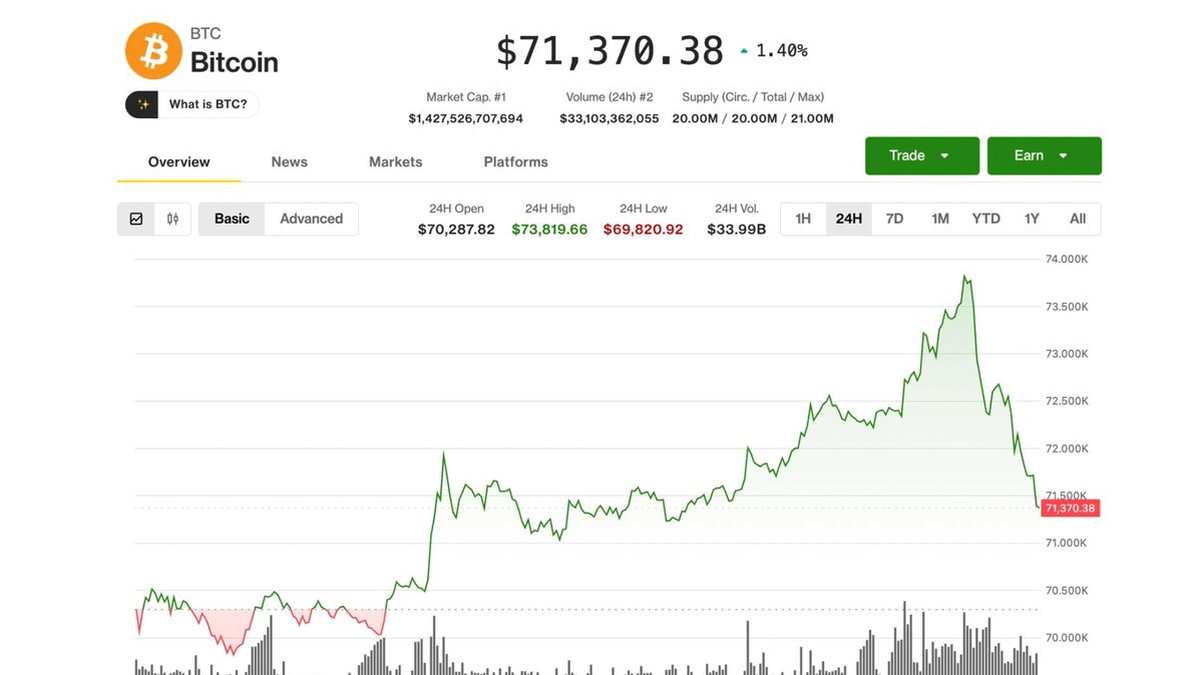
A white-hot crypto rally was violently short-circuited today, proving digital assets are NOT immune to real-world bullets and bombs. Bitcoin’s surge toward $74,000 slammed into a brick wall, nosediving over 3.5% in minutes as headlines confirmed U.S. military deployments to the Middle East and a deadly aircraft crash in Iraq. This isn't just a dip; it's a stark warning that blockchain security means nothing when geopolitical zero-day events trigger a global risk-off panic.
The catalyst was a one-two punch of escalating conflict. The Pentagon is mobilizing a Marine expeditionary unit as Iran intensifies attacks, while the U.S. Central Command confirmed fatalities from a crashed refueling aircraft. The immediate effect was a market-wide seizure: Bitcoin reversed to $71,200, major stock indices wiped out gains, and oil spiked. This exposes the foundational vulnerability of the crypto ecosystem: its perceived role as a risk asset. When traditional markets flinch, crypto bleeds.
"These events are a systemic exploit on market psychology," revealed a senior risk analyst for a global trading firm, speaking on strict anonymity. "The algorithms and leveraged positions that fuel rallies are instantly reprogrammed for flight at the first sign of geopolitical heat. The half-life of optimism is measured in seconds, not days." This rapid repricing underscores a critical cybersecurity-style flaw in market structure itself—a susceptibility to headline-based contagion.
Why should every crypto holder care? Because this volatility is a direct test of your portfolio's defense against black swan events. It's not just about a phishing scam draining your wallet; it's about a geopolitical data breach of market stability that can drain your asset's value globally. Today's events are a live-fire drill for worse to come, proving that external shocks remain the ultimate unpatched vulnerability.
We predict this is merely a preview. The intertwined pressures of global conflict, energy prices, and monetary policy will trigger more frequent and violent flash crashes. Crypto's correlation to traditional risk assets is its Achilles' heel, a flaw that state actors and institutional whales will learn to exploit with surgical precision.
The decentralized dream just met the centralized reality of war. Buckle up.