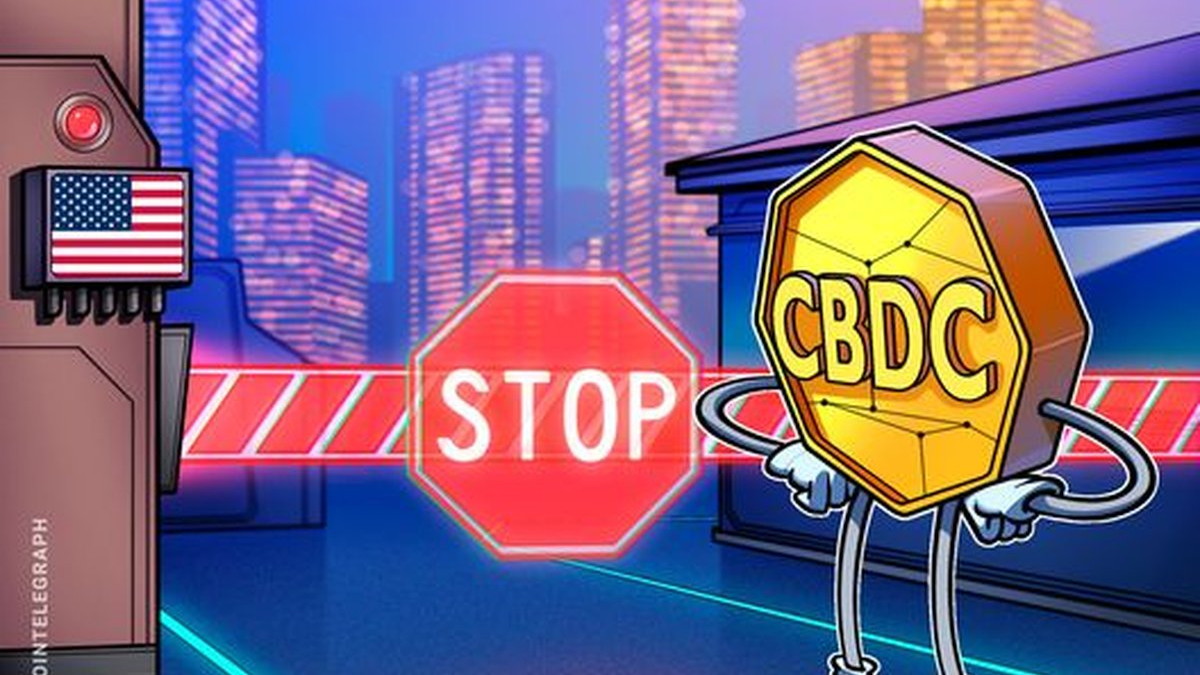
SENATE DECLARES WAR ON DIGITAL DOLLAR: BLOCKCHAIN SECURITY NOW A POLITICAL BATTLEGROUND
In a stunning political maneuver, the U.S. Senate has voted overwhelmingly to BAN the Federal Reserve from issuing a Central Bank Digital Currency until 2030, burying the provision inside a bipartisan housing bill. This isn't just policy—it's a direct assault on the future of state-controlled money and a massive, implicit endorsement for private, permissionless crypto and stablecoins. The vote, 89 to 10, sends a thunderous message: Washington fears the surveillance state a CBDC could enable.
The core of the amendment is a critical distinction. It explicitly does NOT prohibit dollar-pegged stablecoins that are "open, permissionless, and private." This carve-out is a seismic win for the crypto industry, aligning with Treasury and Trump-era visions of using private stablecoins to project dollar hegemony. The move transforms the debate from "if" to "who"—who controls the digital dollar? The answer, for now, is the free market, not the Fed.
Experts warn this political fight is a proxy for a far darker cyber war. "This legislation is a direct response to the ultimate government exploit—a financial system with built-in backdoors," states a former intelligence official specializing in cybersecurity. "A CBDC is a programmable, centralized ledger. It represents a systemic vulnerability where a single point of failure—or a malicious state actor—could orchestrate a data breach on a national scale. The fear isn't inflation; it's digital control."
Why should every crypto holder care? Because the battle lines are now drawn between programmable control and sovereign individual security. Lawmakers like Representative Warren Davidson warn that even regulated stablecoins under proposed bills could create surveillance tools rivaling a CBDC. This political drama underscores that true blockchain security—decentralized, transparent, and resistant to censorship—is the only defense against both criminal ransomware attacks and state-sponsored financial overreach.
We predict this ban is merely the opening salvo. The coming years will see escalating clashes as governments worldwide test digital currencies, inevitably leading to catastrophic zero-day exploits in centralized systems and a surge in sophisticated phishing campaigns targeting both CBDC pilots and legacy finance. The privacy coins and decentralized networks that thrive today will become the primary shelters.
The fight for the future of money is no longer theoretical. It's law. And the hackers, both state-sponsored and criminal, are already writing the next chapter.