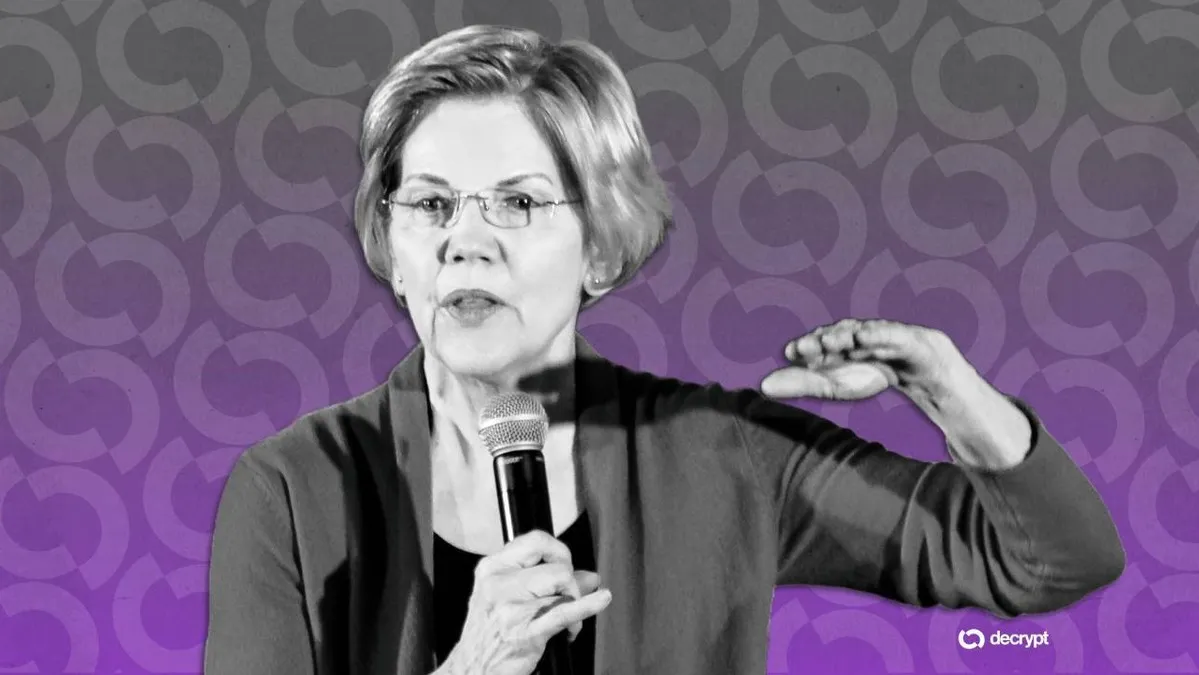
In a tense Senate Banking Committee hearing, the future of a proposed cryptocurrency-focused bank with ties to former President Donald Trump became a flashpoint, drawing stark connections to broader cybersecurity threats in the digital asset space. Senator Elizabeth Warren (D-MA) grilled Acting Comptroller of the Currency Michael Hsu over his agency’s review of an application from Custodia Bank. The firm’s founder, Caitlin Long, has been a prominent advocate for integrating crypto with traditional finance but has also drawn scrutiny for her political donations to Trump.
Warren framed her inquiry around systemic risk, explicitly citing the dangers of malware, ransomware, and data breach events that have plagued the cryptocurrency industry. She argued that granting a national bank charter to a crypto-native institution could expose the broader financial system to these digital threats. "The crypto landscape is a minefield of security vulnerabilities," Warren stated, "where hackers routinely use phishing schemes and software exploits to steal billions. We cannot allow those risks to migrate into the core of our banking system."
Acting Comptroller Hsu defended the OCC’s cautious, case-by-case approach. He acknowledged the heightened cybersecurity challenges, noting that any institution dealing in digital assets would be subject to rigorous security standards. Hsu emphasized that the review process specifically evaluates an applicant’s ability to manage operational risks, including defending against zero-day vulnerability attacks and sophisticated network intrusions. "Our job is to ensure safety and soundness," Hsu replied. "That means an uncompromising focus on resilience against all forms of cyber attack, including those that target the underlying blockchain infrastructure."
The debate underscores a deepening political and regulatory divide. Proponents of Custodia Bank argue that bringing crypto firms under the strict oversight of the OCC would enhance, not diminish, security by applying traditional banking’s robust cybersecurity frameworks. They contend that regulated banks are better equipped to prevent data breach incidents than the current patchwork of state-licensed crypto exchanges, which have been frequent targets for exploits.
However, Warren and other critics see the bid as a dangerous precedent. They point to incidents where North Korean hackers have used ransomware payments in crypto to fund weapons programs, and where phishing campaigns have drained consumer wallets. The potential for an unknown zero-day flaw in a bank’s digital vault system, they warn, could have catastrophic consequences far beyond the crypto market, threatening the stability of connected traditional financial institutions.
The hearing also highlighted the evolving nature of financial cybersecurity. As blockchain-based assets grow, so do the attack vectors. Hackers no longer just target individual wallets; they seek to compromise the core governance of decentralized protocols or find vulnerability in the smart contracts that manage billions in value. A federally chartered bank dealing in these assets would become a high-value target for such advanced, persistent threats.
With the OCC’s decision on Custodia Bank pending, the clash between Warren and Hsu signals more than a single regulatory verdict. It represents a fundamental argument about how, or if, the future of digital finance can be securely grafted onto the old system. The outcome will set a critical precedent for how the U.S. manages the intersection of high-finance, political influence, and the ever-present threat of digital crime.