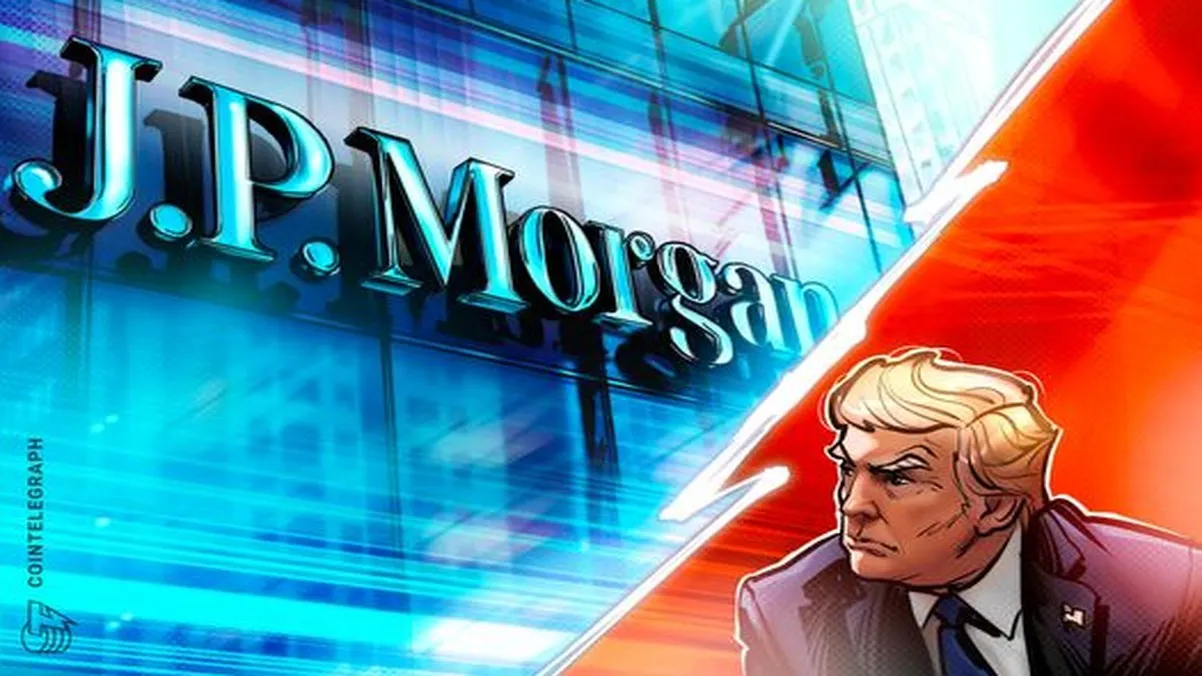
JPMorgan Chase has publicly confirmed that it closed the personal bank accounts of former President Donald Trump in the wake of the January 6th Capitol attack, a decision that underscores the complex intersection of finance, politics, and corporate risk management. The banking giant stated the move was part of a routine review of accounts that did not meet its commercial standards, though the timing directly links the action to the political fallout from the riot.
The decision to "debank" a high-profile political figure immediately raises significant questions about cybersecurity and operational risk. Financial institutions like JPMorgan are prime targets for hacktivist groups and state-sponsored actors seeking to retaliate for perceived political stances or to sow chaos. A sophisticated cyber attack could aim to disrupt services, steal sensitive customer data, or manipulate financial records, turning a business decision into a national security incident.
Experts warn that such institutions must now be on high alert for a surge in targeted phishing campaigns. Malicious actors could craft convincing emails, disguised as communications from the bank or political groups, to trick employees into revealing credentials or installing malware. A single successful phishing exploit could provide attackers with a foothold inside the bank's network, leading to a catastrophic data breach.
The threat extends beyond traditional malware to more disruptive forms of attack, such as ransomware. Criminal syndicates, possibly motivated by political ideology or simply opportunity, could deploy ransomware to encrypt critical banking systems, demanding a crypto payment in Bitcoin or another cryptocurrency to restore operations. The immutable nature of blockchain transactions makes tracing and recovering these funds exceptionally difficult for law enforcement.
Furthermore, the political controversy could inadvertently expose previously unknown software flaws. As internal and external scrutiny of the bank's digital infrastructure intensifies, security researchers and hostile actors alike may discover a critical zero-day vulnerability in its online banking platforms or internal software. Such an unpatched vulnerability represents a severe threat, as it can be weaponized by attackers before developers have a chance to issue a fix.
In response to the heightened threat landscape, JPMorgan has likely activated enhanced security protocols. This includes increased monitoring for unusual network activity, accelerated patch management cycles to close any potential vulnerabilities, and mandatory security training for staff to recognize advanced phishing attempts. The bank's security teams are undoubtedly scanning for any signs of an active exploit attempt against its systems.
The incident sets a precedent that forces all major financial institutions to reevaluate their exposure. The convergence of geopolitical events, corporate policy, and digital criminality means a business decision can rapidly escalate into a severe cybersecurity crisis. Banks must now consider not only commercial and reputational risk but also the tangible threat of retaliatory cyber warfare from diffuse and unpredictable actors.
Ultimately, JPMorgan's acknowledgment highlights a new era of corporate vulnerability. Protecting financial infrastructure now requires defending against both technical exploits and the political fallout that can trigger them. As digital assets and crypto-based extortion become the weapons of choice for adversaries, the industry's resilience will be tested far beyond balance sheets, relying on constant vigilance against an evolving array of cyber threats.