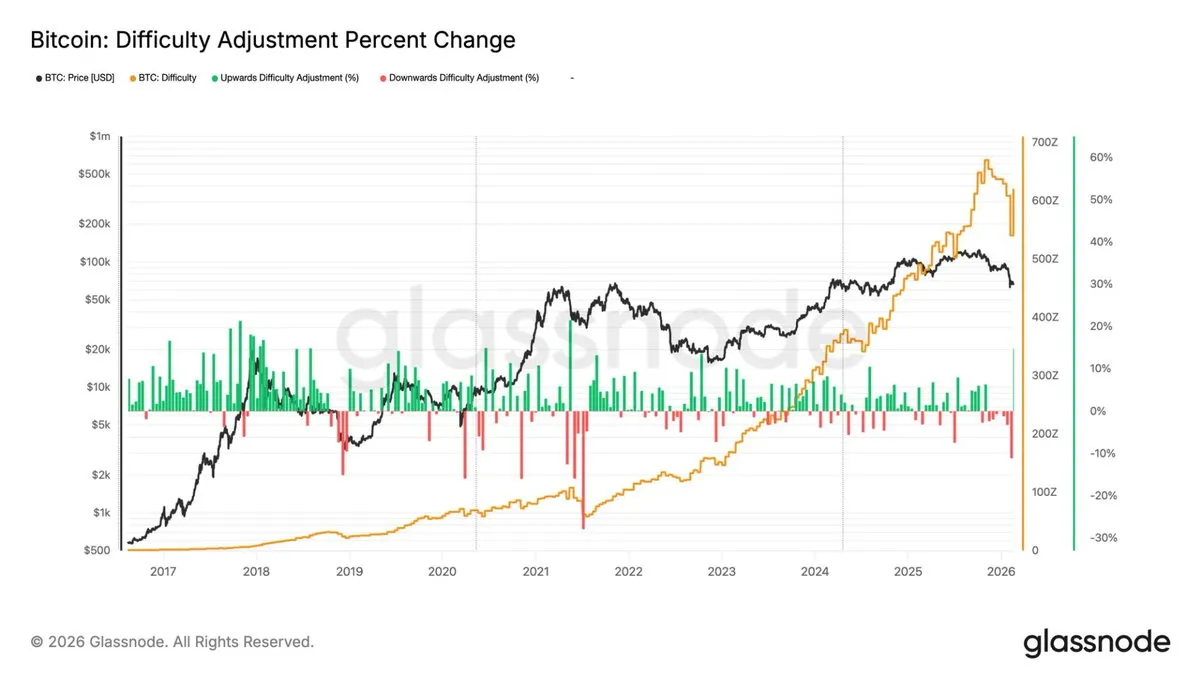
Bitcoin's mining difficulty has surged by 15%, marking its largest single increase since 2021. The network's difficulty level now sits at a staggering 144.4 trillion. This recalibration occurs automatically every two weeks, ensuring block times remain consistent at roughly ten minutes. The sharp rise indicates a significant recovery in the total computational power, or hashrate, dedicated to securing the blockchain.
This rebound follows a period of notable decline. A severe winter storm across key U.S. mining regions forced major operations offline, causing a 12% drop in difficulty. The network's hashrate plummeted from its peak of 1.1 zettahash per second last October to just 826 exahash per second in February. It has since recovered powerfully to approximately 1 zettahash per second.
The recovery is particularly striking given the current market pressures. Bitcoin's price, while rebounding to around $67,000, remains well below its all-time highs. More critically for miners, the "hashprice"—their estimated daily revenue per unit of hashrate—is languishing near multi-year lows. This creates a severe profitability squeeze for many operations.
Despite this financial pressure, large-scale miners with access to cheap, stable energy continue to deploy hardware. This sustained investment highlights a long-term confidence in the Bitcoin network's fundamentals. Entities like the United Arab Emirates, reportedly sitting on hundreds of millions in unrealized mining profit, exemplify this strategic commitment.
The resilience of the mining network is a cornerstone of blockchain security. A high and growing hashrate makes the network exponentially more resistant to attack, providing a critical layer of defense against potential exploits. This robust security is fundamental for institutional adoption and trust in the broader crypto ecosystem.
However, the digital asset space faces persistent threats beyond network integrity. Cybersecurity remains a paramount concern, with bad actors constantly developing new methods of attack. Incidents involving sophisticated malware and ransomware campaigns continue to target exchanges and wallets, often seeking to exploit any vulnerability.
Users must remain vigilant against social engineering attacks, such as phishing schemes, which attempt to steal private keys and seed phrases. The discovery of a critical zero-day vulnerability in popular software can also lead to a catastrophic data breach if not patched immediately. Proactive personal security is non-negotiable in this environment.
Ultimately, Bitcoin's latest difficulty jump signals underlying network health and miner dedication, even amid a price slump and profit compression. This computational fortification, combined with diligent personal cybersecurity practices, forms the dual pillars of a secure crypto future. The strength of the protocol and the vigilance of its users will determine the ecosystem's resilience.